The 9-to-5 office grind ended for hundreds of millions of workers in 2020. What replaced it — a fragmented mix of home desks, café tables, and conference room bookings — didn’t just change where people work. It changed how they read, what they read, and how much cognitive load they can actually sustain while doing it.
Five years in, the data and behavioral patterns tell a clear story.
Attention Spans Shortened, but Focus Sessions Deepened
Remote and hybrid workers no longer have a single “reading environment.” They toggle between a kitchen table, a co-working space, and a commute — each context demanding a different mode of attention. The result is a split reading profile that didn’t exist at scale before 2020.
Micro-Reading Became the Default
Newsletter open rates jumped 21% between 2020 and 2024 (Mailchimp industry benchmarks). The format won because it fits the hybrid worker’s natural rhythm: short, scannable, delivered to the inbox rather than requiring active tab management. Substack grew from 250,000 paid subscribers in 2020 to over 2 million by 2024. LinkedIn articles, Twitter/X threads, and company Slack digests filled the same function — structured bursts of text that can be consumed in 90 seconds between calls.
The pattern is consistent: hybrid workers became expert skimmers during transitions (the five minutes before a standup, the walk to a second screen) and shifted longer reading to dedicated blocks.
Deep Reading Migrated to Scheduled Slots
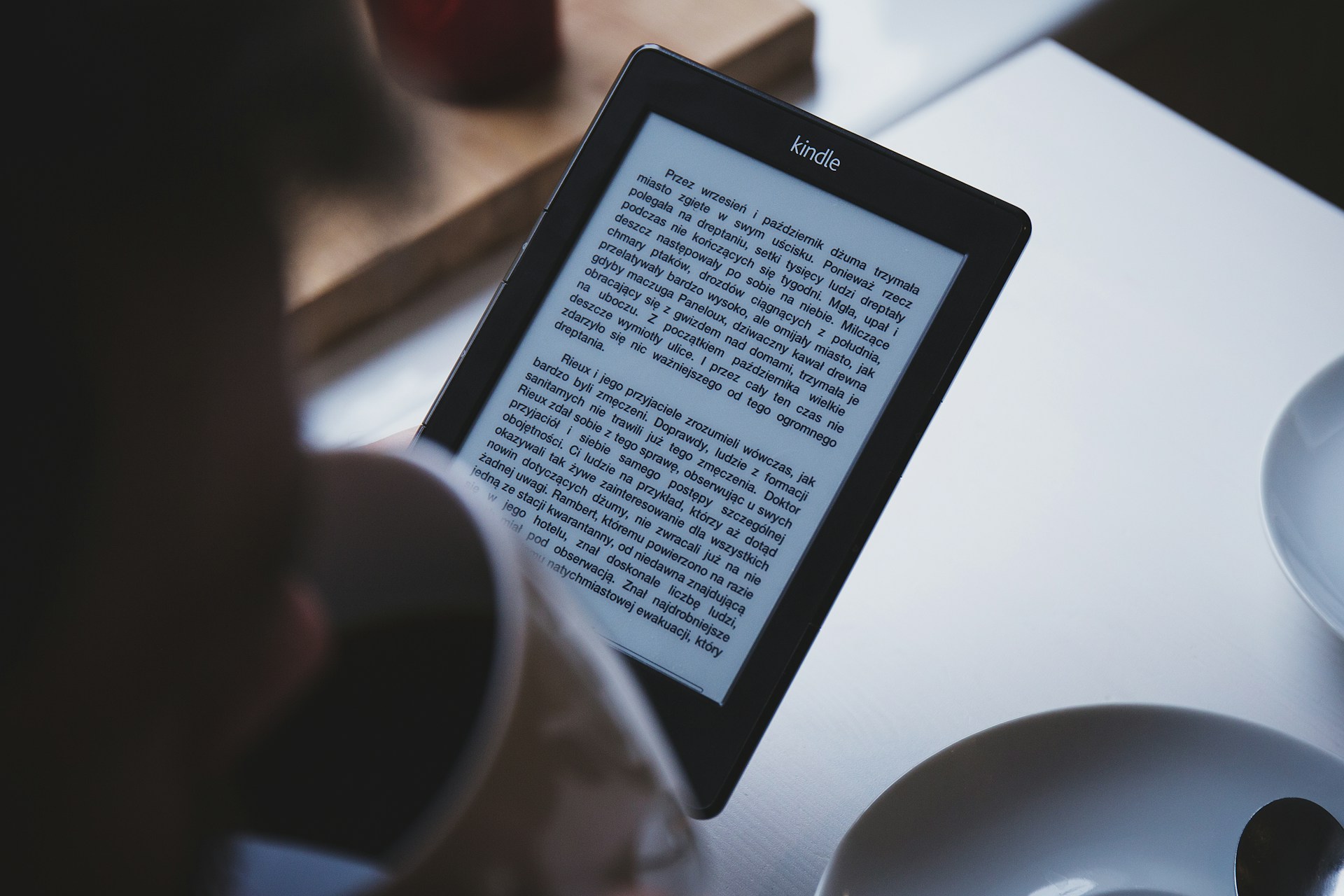
Simultaneously, e-reader sales and audiobook consumption rose. Kobo and Kindle reported a sustained 15–20% increase in daily active reading sessions post-2021. The explanation isn’t paradoxical: when the commute disappeared, workers consciously rebuilt a reading ritual. Morning coffee at the desk replaced the subway scroll. Evening wind-down with a Kindle replaced office decompression.
Deep reading didn’t die — it got scheduled.
Screens Multiplied, Reading Surfaces Diversified
The average hybrid worker now owns or regularly uses three to four screens. That fragmentation reshaped which surface gets used for what type of reading.
The Phone Lost the Long-Form Race
Pre-2020, mobile was eating everything. Post-hybrid shift, phones became primarily reactive reading devices: notifications, quick replies, headlines. Sustained reading on mobile dropped among knowledge workers, replaced by tablet and laptop consumption for anything over 500 words. Eye-tracking and UX studies from Nielsen Norman Group showed consistent patterns: mobile scrolling is associative and interrupted, while laptop and tablet reading follows a more structured F-pattern or linear sequence.
PDFs, Whitepapers, and Internal Docs Surged
Corporate reading load increased sharply. Distributed teams replaced verbal briefings with written documentation. Notion, Confluence, and Google Docs became primary communication channels. Workers who previously received information verbally in meetings now read it. A 2023 Grammarly Business report found that knowledge workers spend an average of 26% of their workday reading and writing — up from 19% in 2019.
That’s not leisure reading. That’s cognitive labor. And it competes with everything else.
Reading Fatigue Became a Recognized Problem
By 2022, “reading fatigue” entered the vocabulary of HR teams and productivity researchers alongside Zoom fatigue. The mechanism is the same: too many inputs, not enough recovery, diminishing comprehension per hour.
Comprehension Dropped Under Load
Microsoft’s Human Factors Lab published research in 2021 showing that back-to-back meetings degraded focus markers in EEG readings. The same principle applies to dense sequential reading. Workers who consume 6–8 hours of screen text per workday report lower retention from the final third of their reading day. Skim rates increase, annotations decrease, and recall in follow-up conversations weakens.
Audio and Text Hybrid Consumption Grew in Response
Audiobooks, text-to-speech tools, and podcast-style content exploded as a cognitive offload strategy. Audible reported that professionals aged 25–44 were its fastest-growing segment from 2021–2024. Read-aloud features in iOS, Android, and apps like Matter and Readwise gained users specifically because they let workers “read” while walking, cooking, or commuting without adding visual strain.
What Actually Changed vs. What Was Already Happening
It’s important not to over-attribute. The shift toward digital reading was already in motion before 2020. E-commerce, remote schooling, and streaming had been training shorter attention windows for a decade. Hybrid work didn’t invent these patterns — it accelerated and stratified them.
What hybrid work specifically caused:
- Higher baseline reading volume during work hours (documentation culture)
- Intentional deep reading rituals replacing passive commute consumption
- Device-context specialization (phone for reactive, tablet/laptop for active reading)
- Fatigue-driven format preferences — shorter, structured, audio-compatible content winning over long unbroken text
The Format War Has a Preliminary Winner
Five years of hybrid work produced readers who are simultaneously more sophisticated and more fragmented. They consume more text than their 2019 counterparts, but they’ve become ruthless about format. Dense, unbroken prose loses. Chunked, navigable, audio-compatible content wins.
For publishers, content teams, and internal communicators, this isn’t a trend to watch. It’s already the baseline expectation of every professional reader they’re trying to reach.