
A novelist sits at her desk staring at a blank page. She’s three chapters in and stuck. Should her protagonist confess to her sister now or wait another hundred pages? Everything feels like it hinges on this choice. Too early and the tension dies. Too late and readers bail. She’s running calculations in her head about emotional payoffs, trying to read an audience that doesn’t exist yet.
Across town, a poker player watches his opponent. His hand is okay. Not great, not terrible. His opponent just raised hard for the third time in a row. Is she bluffing or did she actually catch what she needed? He’s thinking about fold equity, pot odds, six hours of watching how she plays before this moment.
These look like totally different worlds. Writing novels is art. Poker is math and gambling. But professional poker players and serious novelists actually use a lot of the same skills. Think the same way. Face the same psychological battles. It’s not just a metaphor.
The Architecture of Narrative and the Game
Poker and writing novels both work on structure that unfolds slowly. A novelist doesn’t blast you with the entire plot in chapter one. She feeds you details bit by bit. Creates curiosity. Builds momentum. You keep reading to find out what happens next. When to reveal information matters as much as what you reveal.
Poker players do the same thing with betting instead of words. Every check, call, raise, fold tells your opponents something. A good player builds a story about how strong their hand is through these moves. They control what others think they’re holding. Someone might bet aggressively for hours to look like they only play premium hands. Then they use that reputation to pull off a bluff at the perfect moment.
Pacing works the same way in both. Novels need variation in intensity. Action sequences give way to quieter character moments. Tension builds toward climax, then releases. Readers need breathing room between major plot developments or they get overwhelmed and numb.
Professional poker operates identically. You can’t maintain maximum aggression constantly without becoming predictable and exploitable. Players vary their pace. Mix passive and aggressive play. Create rhythms that keep opponents guessing. The best players develop an intuitive sense of when to push action forward and when to slow things down. Just like novelists managing narrative flow.
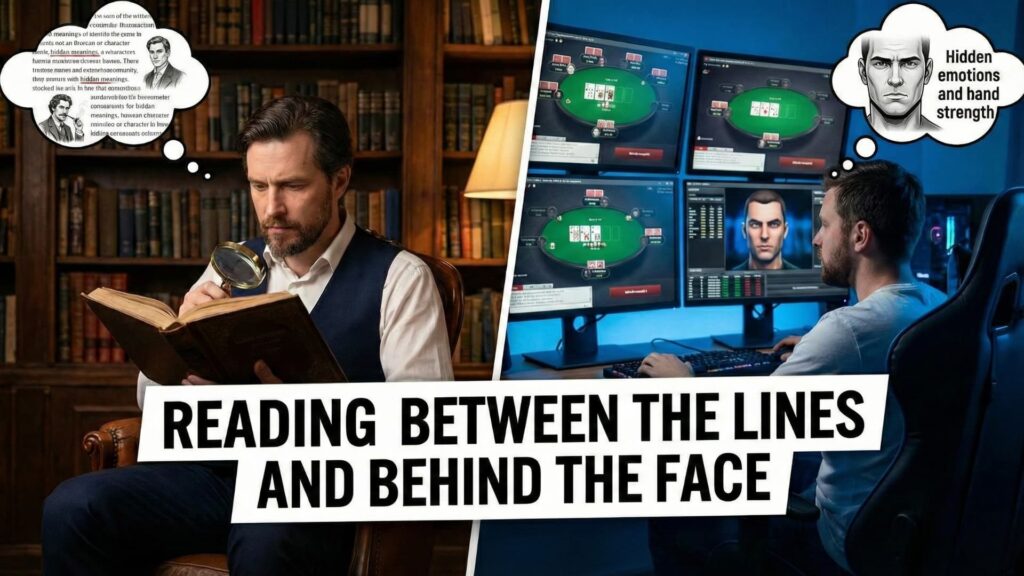
Reading Between the Lines and Behind the Face
Great novelists understand human psychology. They observe how people reveal themselves through small gestures, word choices, behavioral patterns. A character who constantly adjusts her watch when lying gives readers a tell. A protagonist who deflects serious conversations with humor shows you their defense mechanisms through action instead of exposition.
This skill transfers directly to poker. Players read opponents through physical tells, betting sizes, timing, decision patterns. Someone staring intensely at the flop cards might be calculating outs on a drawing hand. A player who talks more when bluffing reveals information without meaning to. The best players catalog these observations across hours of play. They build psychological profiles as detailed as character sketches.
Both crafts require separating signal from noise. Not every gesture means something. Sometimes a character fidgets because the author needs to fill space, not because it reveals psychological depth. Sometimes a poker player takes extra time because they’re tired, not because they’re contemplating a bluff. Telling meaningful patterns from random variation separates pros from amateurs in both fields.
Novelists and poker players also deal with incomplete information. A novelist never fully knows how readers will interpret a scene. A poker player never sees opponents’ cards until showdown. Both make decisions based on educated guesses, experience, probability. Not certainty.
The Courage to Risk and Revise
Writing a novel requires massive risk tolerance. Authors invest months or years in projects that might never find publishers or readers. They commit to story directions that could prove disastrous. Often they only discover problems after writing themselves into corners. Every creative choice is a bet on what will resonate with audiences.
Poker demands similar comfort with uncertainty. Players risk substantial money on probabilistic edges. They accept that short-term results often contradict long-term expectations. A mathematically correct play can lose. A terrible decision occasionally wins. Success means making good choices repeatedly even when outcomes sometimes feel like punishment for doing exactly the right thing.
Both pursuits also demand radical revision. Novelists rewrite chapters, eliminate favorite passages, restructure entire manuscripts when their initial approach fails. The ability to abandon sunk costs, whether time or emotional investment, separates published authors from people with desk drawers full of abandoned drafts.
Professional poker players show identical adaptability. They abandon strategies that aren’t working. Adjust to changing table dynamics. Fold hands they desperately want to play when the situation demands it. Emotional attachment to initial plans destroys success in both arenas.
Pattern Recognition as Creative Foundation
Experienced novelists recognize story patterns instinctively. They’ve read enough books to understand how certain plot structures function. Which character archetypes resonate. What narrative techniques create specific effects. This pattern knowledge doesn’t limit creativity. It provides the foundation for innovation. You have to understand conventions before you can break them effectively.
Poker players develop similar pattern fluency through volume. After thousands of hands, they recognize situations instantly. They know what betting patterns typically indicate. How different player types respond to aggression. Which board textures favor which hand ranges. All this accumulated experience lets them process complex situations quickly and accurately.
Both groups also understand that patterns can deceive. Novelists know that sometimes the obvious plot direction disappoints precisely because it’s expected. Poker players recognize that following standard strategy against observant opponents makes them exploitable. Mastery involves knowing when to follow patterns and when to deliberately violate them.
Skills elite poker players and successful novelists share:
- Reading psychology and human behavior accurately
- Making decisions comfortably under uncertainty
- Constructing and manipulating narratives strategically
- Recognizing patterns while knowing when to break them
- Staying emotionally regulated during long frustrating periods
- Willingness to revise or abandon what isn’t working
- Understanding pacing and rhythm in their medium
The Solitary Performance with an Invisible Audience
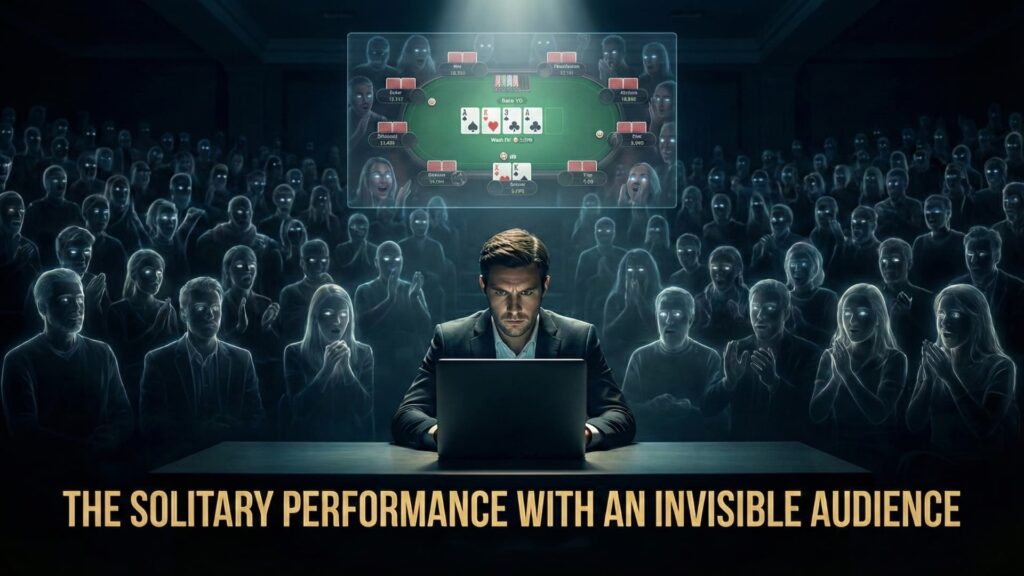
Novel writing happens in isolation. Authors spend hundreds of hours alone creating work that readers will eventually experience when the author isn’t there to explain or defend their choices. This requires imagining audience reactions without direct feedback. Anticipating questions or confusion. Crafting experiences for people you’ll never meet.
Poker players at the table aren’t physically alone but they inhabit a similar psychological space. Despite being surrounded by opponents, each player makes decisions in mental isolation. You can’t consult others about whether to call or fold. You can’t explain your reasoning in the moment. Success depends on how well you’ve internalized strategy and adapted it to the specific situation.
Both groups face long stretches where skill doesn’t seem to matter. Novelists write for months with no external validation. They trust their work has value despite the absence of readers. Poker players endure cold streaks where cards refuse to cooperate. They need faith in process over results. The psychological resilience this demands is no joke.
Creating Meaning Through Sequential Choices
Both novel writing and poker boil down to creating meaning through sequences of decisions. A novelist chooses which word follows the previous word. Which scene follows the last scene. Which thematic element to emphasize or downplay. These individual choices accumulate into larger patterns that readers experience as story, character, meaning.
Poker players make sequential betting decisions that accumulate into session-long narratives. Each choice builds on previous choices. Creates reputations. Establishes patterns. Sets up future opportunities. The game unfolds through layers of these decision sequences. Skilled players track multiple narrative threads simultaneously.
The satisfaction in both comes from this sequential mastery. A perfectly structured novel feels inevitable in retrospect. Each element building toward the whole. A perfectly played poker session demonstrates similar coherence. Early decisions paying off in later situations. Both represent the human mind imposing order, strategy, intention onto raw material. Whether that material is language or shuffled cards.
Neither poker players nor novelists can guarantee success through skill alone. Variance exists in both domains. But both can dramatically improve their odds. Understanding patterns. Reading psychology. Managing risk. Making disciplined choices over extended time. That shared foundation connects two worlds that otherwise seem impossibly distant.